what is mental load
What Is the Mental Load? A Plain-English Explanation (and Why It's So Tiring)
A plain-English explanation of what mental load actually means, why it's so exhausting even when you're not doing that much, and what you can do about it today.


In this article
You're at a red light, thumbing out a reply to a school email while mentally adding "water bill" to a list you haven't written down yet. You booked your mom's appointment at lunch but it's floating somewhere between your second and third thought. Your phone has eleven notes apps with eleven half-finished lists. And the sentence that keeps looping is: "I'm not even doing that much. Why am I this tired?"
That tiredness has a name. Mental load is the ongoing, invisible work of tracking, remembering, anticipating and managing everything that keeps a household (and a job, and aging parents, and a social calendar) running. It's not the doing. It's the keeping-track-of. The dentist is Thursday. The permission slip is due Friday. The birthday gift hasn't been bought. The shared calendar exists, but you're the only one who checks it. Your head is the system, and nobody sees the system running.
Mental load definition: what psychologists actually mean
The term comes from cognitive science. In the 1980s, educational psychologist John Sweller developed cognitive load theory to describe how much working memory a person can handle at once. Working memory is small. Researchers at the University of Missouri have found it holds roughly three to five items at a time. When you're holding the water bill, Thursday's dentist, the unsigned permission slip, Mom's prescription refill, and the fact that the dog needs flea meds, you're already at capacity before you even start your actual job.
Sociologist Susan Walzer brought the idea into family life in the late 1990s, documenting how "thinking about the baby" fell almost entirely to mothers, even in couples who split physical tasks evenly. The mental load meaning, in plain English: it's being the project manager of your family's life, except nobody hired you, nobody reports to you, and nobody sees the project plan because it lives in your head.
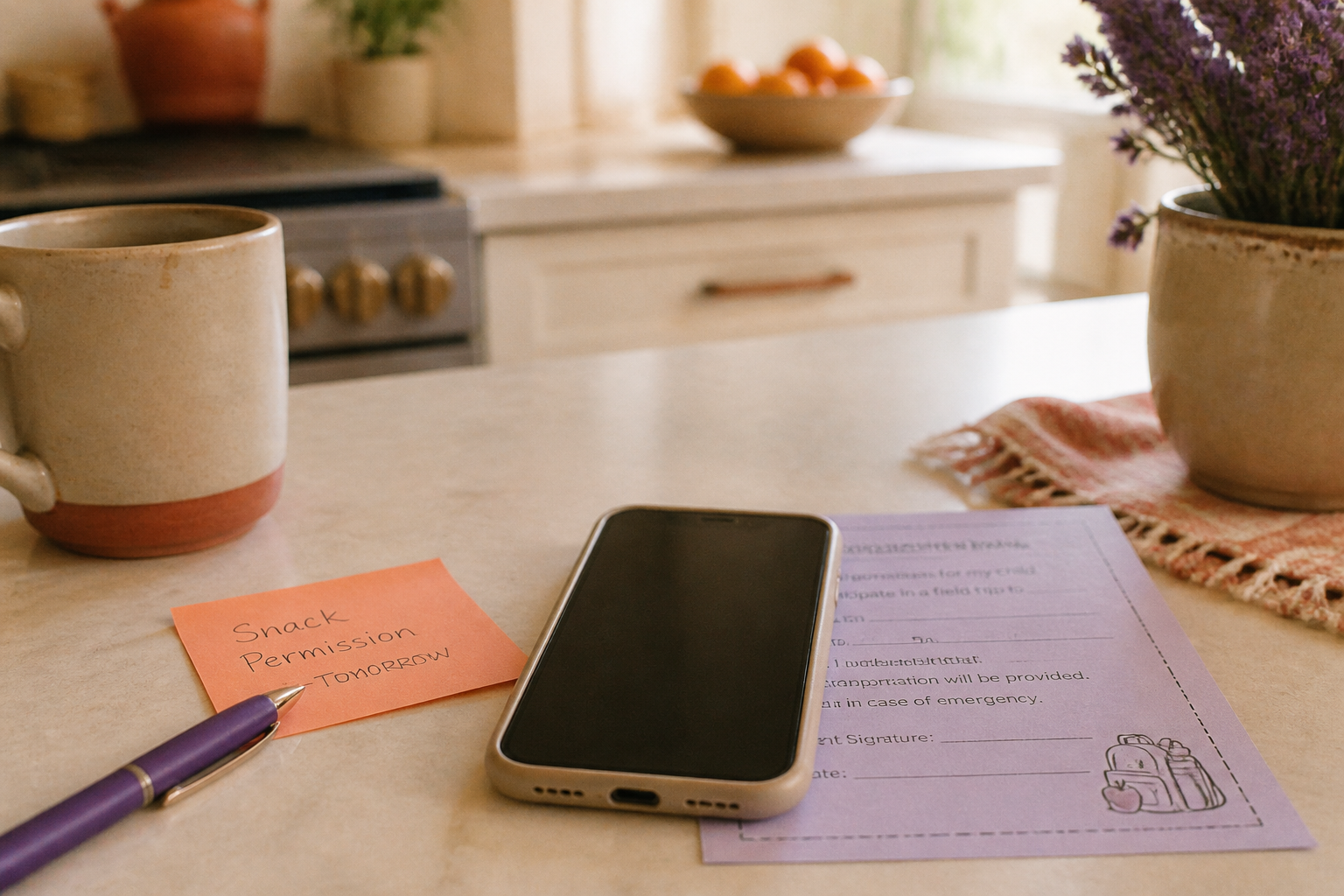
Is mental load a real thing, or is it just complaining?
If you've ever searched "is mental load bs" or "mental load is a myth," you're not alone. There's a strain of pushback that says everyone has stuff to remember, and calling it a "load" is dramatic. Here's why that doesn't hold up.
First, the research. A 2019 study published in Sex Roles found that women in heterosexual couples performed significantly more cognitive household labor (anticipating needs, monitoring progress, making decisions about the household) than their male partners, even when both worked full-time. This wasn't self-reported complaining. It was measured across categories of invisible work. The Pew Research Center confirmed similar patterns in 2023, finding that in most couples, one partner (usually the mother) takes on the bulk of scheduling, planning and keeping track.
Second, the fatigue is cognitive, not physical. You can sit on the couch all day and still feel drained if your working memory never got a break. That's not laziness. That's a brain running too many background processes with no way to close the tabs.
Why it's so tiring (even when you're "not doing that much")
There are three reasons the mental load exhausts you in a way that's hard to explain to anyone who doesn't carry it.
It never clocks out. Physical tasks end. You wash the dishes, and the dishes are done. But the tracking layer never stops. You're adding to your mental list while driving, while working, while trying to fall asleep. There's no boundary between "on" and "off" because the system is your own brain.
It's invisible, so nobody thanks you for it. When the permission slip shows up signed and on time, nobody says, "Great job remembering that." They don't even know it was a task. The work only becomes visible when it fails: the missed appointment, the expired registration, the late RSVP. So you're performing at a high level constantly, and the only feedback you get is when something slips.
Delegation doesn't actually offload it. "Just ask him to do it" is advice you've heard a hundred times. But the asking is work. Checking whether he did it is work. Noticing it needed to be done in the first place is work. You can hand someone a task and still carry the cognitive overhead of managing it. That's why "he helps if I ask" doesn't solve the problem. You're still the project manager.
You can hand someone a task and still carry the cognitive overhead of managing it. That's why "he helps if I ask" doesn't solve the problem.

 Dentist ThuCall MomWater billPermission slipFeeling overloaded?
Quick quiz · About a minute
Mental load quiz: how much are you carrying?
Quick questions about how much you keep track of. Get your result and a plan for this week.
Free. No email needed. Your result shows straight away.
What to actually do about it (today, not someday)
The goal isn't to do less. You're already good at what you do. The goal is to stop being the only storage system. To say something once and have it be written down, with the date, in one place, instead of pinballing around your head for three days until you either handle it or forget it.
- Get it out of your head, out loud. The fastest way to empty working memory is to talk. Not to type, not to organize, not to find the right app and the right list. Just say it. "Mom's appointment is Tuesday at two. Water bill is due the 15th. I need to buy Ellie's birthday present before Saturday." Done. It's out. Your brain can stop holding it.
- Put it in one place. Eleven notes apps, three sticky pads and a shared calendar he doesn't check is not a system. It's a scavenger hunt. Pick one single place where everything lands. The bar is low: it has to be faster than keeping it in your head, or you won't use it.
- Stop organizing before you capture. Most mental load management advice tells you to sort tasks into categories, build a family dashboard, color-code by urgency. That's more project management on top of the project management you're already doing. Capture first. Organize later, or not at all. The point is that it's written down, not that it's pretty.
This is roughly what Ripple does. You say what's on your mind, whenever, as messy as it comes out. Ripple pulls out the tasks with the dates you mentioned, tracks the things you keep circling back to, and puts it all in one place. You said it once. It's not in your head anymore. Start a free week or download the app; you can cancel anytime.
You say
"I still need to book Ellie's dentist, it's supposed to be Thursday. Oh and the water bill is due the 15th, I keep almost forgetting that. Mom called about her prescription, I'll handle it at lunch tomorrow. I'm just tired. I feel like I have forty tabs open in my brain and none of them will close."
Ripple catches
- Book Ellie's dentist (Thursday)
- Pay water bill (the 15th)
- Handle Mom's prescription (tomorrow, lunch)
- Mood: drained, mentally overloaded
- Pattern: recurring theme of carrying too many things at once
Mental load explained in one sentence
If someone asks you what mental load means, here it is: it's the full-time job of remembering, planning and tracking everything for everyone around you, and it's exhausting because no one sees it, no one shares it, and it never stops running. It's real. It's documented. And if you're feeling it, you're not being dramatic. You're doing a tremendous amount of invisible cognitive work, and the first step is to stop making your brain the only place it lives.
FAQ
Is mental load a real psychological concept?
Yes. It's grounded in cognitive load theory, which describes the limits of working memory. Sociologists and psychologists have studied how cognitive household labor (planning, anticipating, tracking) distributes in families. It's not a social media buzzword. It's measured, documented and published in peer-reviewed journals.
What's the difference between mental load and stress?
Stress is a response. Mental load is a cause. You can be stressed about a deadline, and that stress goes away when the deadline passes. Mental load is the constant background hum of tracking dozens of things at once. It doesn't resolve when one task gets done, because ten more are already queued. Reducing mental load often reduces stress, but they're not the same thing.
Does everyone have mental load, or is it a gendered thing?
Everyone has some cognitive load from managing their own life. But research consistently shows that in households with children, one person (disproportionately the mother) carries the bulk of the household's cognitive labor: the scheduling, the remembering, the anticipating what's needed next. The load becomes a problem when it's invisible, unshared and relentless.
How do I explain mental load to my partner without it turning into a fight?
Skip the accusation and describe the layer they can't see. Something like: "It's not the dishes. It's remembering we're out of dish soap, knowing which store has the brand we use, and adding it to a list before I forget. That layer runs all day, on top of my actual job." Most partners aren't refusing to help. They genuinely don't see the tracking layer because they've never had to run it.
Related reads you might find useful:
Say it once. Ripple remembers.
Talk it out and Ripple pulls out your tasks, tracks your habits and mood, and shows you your patterns each week.
7-day free trial · Cancel anytime