The Best Evening Routines for Founders Who Can't Turn Off Their Brain
Practical evening routines for founders who can't turn off their brain. Science-backed methods to quiet racing thoughts and actually recover overnight.
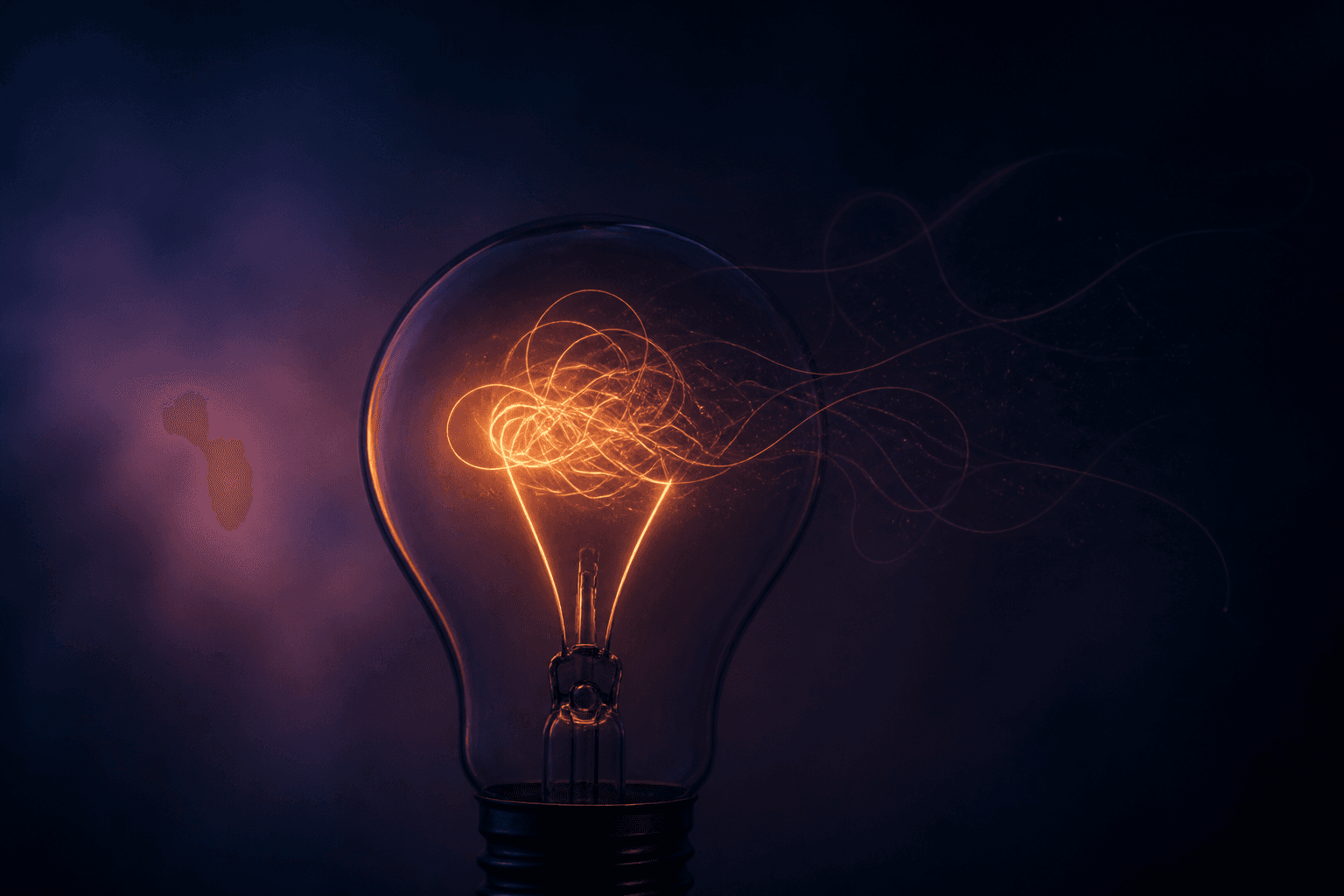
You closed your laptop two hours ago. Your body is on the couch. Your brain is still rewriting that investor email, replaying the hire you're not sure about, and calculating runway for the third time today.
If you're searching for an evening routine for founders who can't stop thinking, you already know the problem. The question is what actually works — not "light a candle and meditate" advice written by someone who's never had payroll anxiety.
Why Founder Brains Don't Shut Off (It's Structural)
Founders carry what psychologists call a high "cognitive load" — the total amount of mental effort being used in working memory. A Harvard Business Review analysis of burnout causes found that a constant sense of responsibility, unclear boundaries between work and rest, and ambiguity around outcomes are primary drivers of mental exhaustion.
Founders hit all three. Every day.
The issue isn't discipline. It's that your working memory has no offloading mechanism. Open loops — unfinished tasks, unmade decisions, unresolved conflicts — stay active in your prefrontal cortex until they're captured somewhere outside your head.
This is the Zeigarnik Effect: the brain fixates on incomplete tasks more than completed ones. Psychology Today documents how unfinished business creates intrusive thoughts that spike at exactly the moment you try to relax.
So the fix isn't "think less." It's close the loops before you try to sleep.
A Practical Evening Routine for Founders Who Can't Stop Thinking
Here's what actually moves the needle, based on research and founder interviews — not wellness influencer content.
1. The Brain Dump (10 minutes)
Externalize everything. Every open task, half-formed idea, worry, and decision sitting in your head — get it out. Writing works. Talking works faster.
A 2018 study in the Journal of Experimental Psychology found that writing a to-do list before bed helped participants fall asleep significantly faster than writing about completed tasks. The key was offloading future-oriented thoughts.
Voice is particularly effective here because you think faster than you type. A 3-minute voice entry captures what would take 15 minutes to write.
2. Separate Capture from Processing
The mistake most founders make: they brain dump and then immediately start solving. Now you're back in work mode.
Capture everything. Process none of it. That's tomorrow's job. The goal tonight is to convince your brain that nothing will be forgotten — so it can let go.
3. Create a Physical Transition
Your nervous system needs a signal that work is over. Digital boundaries alone don't cut it because your phone is also your alarm clock, your reading device, and your connection to co-founders in other time zones.
Physical transitions work better: a walk around the block, a shower, changing clothes. Something your body registers as a boundary.
4. Limit Decision-Making After 8 PM
Decision fatigue is real. Every choice you make after a full founder day is made with depleted resources. Set a hard rule: no decisions after a certain hour. Slack messages get a "will respond tomorrow" reply. Investor questions wait.
This isn't about being unavailable. It's about being honest that your 10 PM decision quality is garbage compared to your 9 AM quality.
If you've read this far, Ripple does exactly what step one describes — you do a short voice brain dump, and it pulls out your tasks, tracks the goals you keep circling back to, and spots the mood patterns you're too close to see. Seven-day free trial, no card required. Built specifically for founders.
5. Replace Scroll Time with a Single Question
Instead of doomscrolling Twitter or re-reading Slack, ask yourself one question: "What actually went well today?"
This isn't gratitude journaling theater. It's pattern recognition. Founders are wired to focus on what's broken. Deliberately noting what worked — even for 60 seconds — gives your brain a different data point to chew on overnight.
What Not to Do
Skip the sleep hygiene listicles that tell you to avoid screens two hours before bed. You're a founder. That's not happening.
Instead, change what you do on screens. Reading a book on Kindle is fine. Refreshing your metrics dashboard is not. The content matters more than the blue light.
Also skip alcohol as a wind-down tool. It might feel like it quiets your brain, but the Sleep Foundation confirms it fragments your sleep architecture, particularly REM sleep — which is exactly where your brain consolidates the creative problem-solving you need most.
The Minimum Viable Evening Routine
If you do nothing else: spend three minutes talking through what's on your mind before you try to sleep. Capture it. Don't solve it. Let your subconscious work the night shift.
That single habit addresses the Zeigarnik Effect, reduces cognitive load, and gives you a record you can act on tomorrow morning with fresh executive function.
It's not complicated. It's just not intuitive — because every instinct in a founder's brain says "solve it now."
The real skill is learning to close the capture loop and trust that tomorrow-you is more capable than tonight-you. Because they are.
FAQ
Why can't I stop thinking about work at night as a founder?
The Zeigarnik Effect causes your brain to fixate on incomplete tasks. Founders carry an unusually high number of open loops — unmade decisions, pending hires, financial concerns — that stay active in working memory until externally captured. A brain dump before winding down helps close these loops.
How long should a founder's evening routine take?
The minimum effective version takes about 3-5 minutes — just long enough to externalize your open tasks and thoughts. You don't need a 90-minute wind-down ritual. Capture what's in your head, create one physical transition, and stop making decisions. That covers about 80% of the benefit.
Is voice journaling better than written journaling for founders?
For evening brain dumps, voice tends to work better because it's faster and lower friction. You speak roughly 3-4x faster than you type, which means you capture more open loops in less time. The goal is speed of externalization, not polish — and voice removes the editing instinct that slows written journaling.
Should founders avoid screens before bed?
The blanket "no screens" advice is impractical for most founders. What matters more is the content. Passive reading or listening is fine. Checking metrics dashboards, responding to Slack, or scrolling social media activates problem-solving circuits that keep your brain wired. Change what you do on screens, not whether you use them.
Related reading:
Brain dump daily. Get your life back.
Try Ripple free for 7 days. Just talk. No typing. Just talk.
No credit card required · Cancel anytime