i keep dropping the ball on everything
I Keep Dropping the Ball on Everything: Why, and What Actually Helps
Forms, appointments, birthdays, replies. If you keep dropping the ball on everything, here's why it happens to capable women and how to stop holding it all.


In this article
The permission slip is on the counter, right where you put it so you wouldn't forget. It was due today. Earlier you remembered that the dentist called to reschedule, that your nephew's birthday is Sunday, and you told a coworker "yep, I'll remember" about the thing she needs. You got to four of the seven. If you typed "I keep dropping the ball on everything" into your phone, there's a good chance you used to be the person who remembered everything. You still are, mostly. That's the problem.
This is a practical guide: why this keeps happening to capable women, where the balls actually drop, and how to stop carrying it all in your head without buying another planner.
"I keep dropping the ball on everything": why it happens
Start with the math, because it isn't in your head. In a 2024 study of US parents, mothers handled 71% of the household tasks that take mental effort (the planning, remembering and anticipating) compared with 45% for fathers. For daily jobs the gap was 79% to 37% (BPS Research Digest). That invisible work has a name, the mental load, and it's the background noise behind every dropped ball.
You aren't remembering one thing. You're remembering the soccer registration that closes Friday, which sneakers are getting tight, your mom's follow-up appointment, the gift for Saturday's party, the reply you owe your friend, and the work request someone tossed you "when you get a sec". Every one of those sits in the same place: your head, with no backup.
One parenting podcast put it better than most articles do: "maybe your brain isn't broken. Maybe it's full." Nothing changed about how sharp you are. The number of things you're expected to hold went up, and nobody gave you anywhere to put them.
It also explains why everyone else's stuff gets done and yours slips. The kids' forms win because someone is waiting on them. Your own appointment hits the floor.
Where the balls actually drop
Most dropped balls don't vanish from your memory. They get lost somewhere between "oh, I need to do that" and actually doing it. Look at where your reminders live right now. For most women in this spot it's something like:
- a Notes app with lists from three different months
- screenshots of the school email, buried under hundreds of photos
- texts to yourself, sitting under the group chat
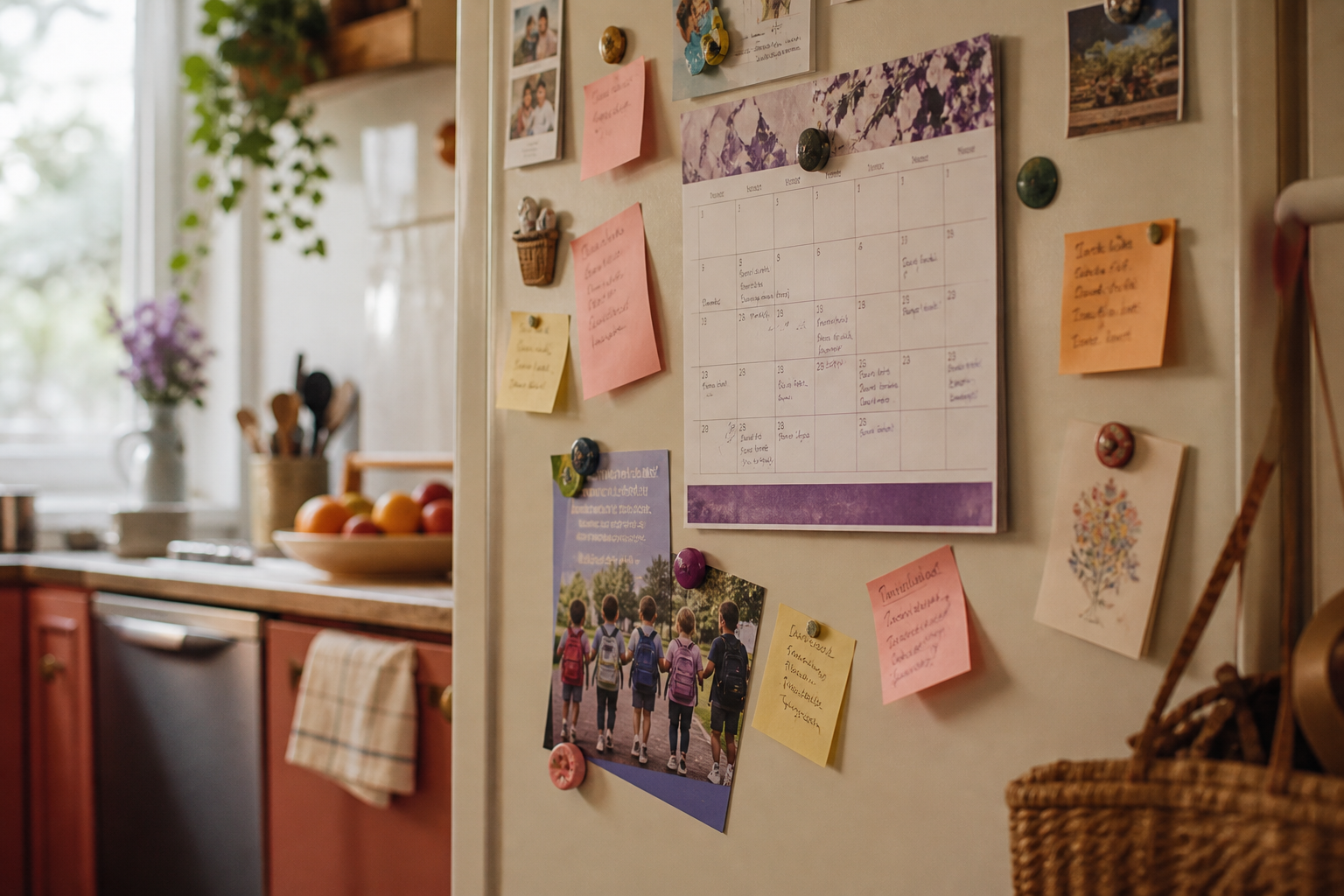
- a sticky note on the fridge, or in the car, or in last week's bag
- a paper calendar that only works while you're standing in front of it
Five places, and you check none of them. Together they almost guarantee the thing you need is in the one spot you didn't look.
Phone alarms don't solve it either. One person on Reddit described the problem exactly: the reminder "goes off once, you swipe it away," and then it's gone. You swiped it because you were in the middle of something, which, when you're carrying all of this, is always.
The cost is real, too. In a 2024 NerdWallet survey, 37% of Americans had paid a late fee in the past year, and among people with kids under 18 it was 61% (NewsNation). If the late fee on the water bill made you want to scream, you're in a very large club.
How to stop dropping the ball
You don't need more willpower or a prettier planner. You need fewer gaps. These steps close them.
- Catch it the moment you think it. The ball drops in the gap between noticing and putting it down. If the dentist comes back to you on the drive, say it out loud to your phone, hands-free, before you pull into the lot.
- Use one place, not five. Pick one spot where everything goes and quietly retire the others. One list you trust beats five you half-check.
- Attach the date when you capture it. "Soccer registration" is a worry. "Soccer registration, closes Friday" is a task. The date is what lets you stop holding it.
- Look at the whole week once. Pick a pocket you already have, like the wait at practice pickup, and read the list through. Nothing on Wednesday should surprise you on Wednesday.
- Keep an alarm for the few hard deadlines. A list holds things; it doesn't tap you on the shoulder. For the handful with real consequences (the form due tomorrow, the bill with the fee), set a phone alarm with the task in the label.
- Drop some on purpose. Not every ball is yours to catch. The class party sign-up, the third group chat, the fundraiser you said maybe to. A clear no is one less thing to drop.
If you want a clearer picture of where your own balls drop, the why do I keep forgetting things quiz walks you through it and gives you a plan.

 !Permission slipBirthday SunThings slipping?
Quick quiz · About a minute
Forgetting things quiz: why do things keep slipping?
Quick questions about why things keep slipping. Get your result and a plan for this week.
Free. No email needed. Your result shows straight away.
Where Ripple fits
That car trick has one weak spot: a voice memo just sits there until you listen back, and nobody listens back. Ripple is built to close that gap. You talk whenever the thought shows up, and it writes it down and pulls out the tasks with the dates you said, all on one list you can open to see your week.
You say
“Soccer registration closes Friday. The dentist wants to move the kids' cleaning, I need to call them back. My nephew's birthday is Sunday and I don't have a gift. I still haven't answered my sister about dinner. Honestly, I'm wiped this week.”
Ripple catches
- Soccer registration, by Friday
- Call the dentist to reschedule the kids' cleaning
- Buy a birthday gift for my nephew, by Sunday
- Reply to my sister about dinner
- Mood: low
The list is the part that catches the dropped balls. The rest is what makes it worth opening. Ripple checks off the habits you track when you mention them, reads your mood from what you say, and over a few weeks shows you what keeps coming up, like your own appointments sliding while everyone else's get done. A Life Matrix tracks the main areas of your life over time, and a weekly report lays out what moved and what slipped.
To be straight about what it doesn't do: Ripple won't ping you when a date arrives, so keep that phone alarm for the true deadlines. What it gives you is one place to put things the moment you think of them, so the five scattered spots can go. And missing a day doesn't wipe anything you've said.
If that sounds like the backup you've been missing, start a free week on the web or download the app. You can cancel anytime.
If you'd rather say it than write it down, here's how Ripple catches things before they slip through the cracks.
Frequently asked questions
Why do I feel like I'm dropping the ball on everything lately?
Usually because the number of things you're tracking went up and the places you keep them didn't change. A new school year, a parent who needs more help, a busier stretch at work: each one adds dates to a head that was already full. It feels like you're slipping. Really, the load grew.
Is it normal to forget this much when you're running a family?
It's very common. When one person holds most of a household's dates, things slip, and that says nothing about how capable you are. If you're worried about your memory in ways that go beyond a too-full schedule, raise it with your doctor.
How do I stop forgetting school forms and appointments?
Capture each one the moment it shows up, in one place, with its date. Look through the week once so nothing catches you off guard, and set a phone alarm for the few with a hard deadline.
Will Ripple remind me when something is due?
No. Ripple doesn't send an alert when a task's date arrives. It keeps everything you've said on one list with the dates you mentioned, so when you open it, your week is there. For hard deadlines, keep a phone alarm as well.
Related reading
Say it once. Ripple remembers.
Talk it out and Ripple pulls out your tasks, tracks your habits and mood, and shows you your patterns each week.
7-day free trial · Cancel anytime